
Critter Corner – Rainbow Bee-eater
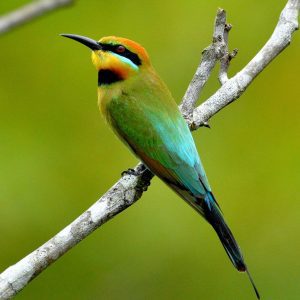 #CritterCorner – If you’ve ever watched a bird twist, dive and wheel through the air with astonishing precision, there’s a good chance you’ve spotted a Rainbow Bee-eater at work.
With their vibrant plumage, slender curved bills and distinctive tail streamers, Rainbow Bee-eaters (Merops ornatus) are among Australia’s most colourful birds. But they’re more than just beautiful. These skilled hunters are true aerial acrobats, capable of catching insects mid-flight with remarkable speed and agility.
The Rainbow Bee-eater is widespread across much of Australia, except in the driest desert regions. They are also found in eastern Indonesia, New Guinea and, occasionally, the Solomon Islands. Open forests, woodlands, shrub lands and cleared areas near water provide ideal habitat for these agile birds.
Flying insects make up the bulk of their diet. Bees and wasps are favourite targets, although they also feed on dragonflies, beetles, butterflies and moths. Perched on an exposed branch or wire, a Rainbow Bee-eater will watch for passing prey before launching into the air in pursuit. Rapid twists, turns and bursts of speed help it capture insects on the wing.
Once caught, the insect is often carried back to a perch before being eaten. Bees and wasps receive special treatment. The bird carefully rubs them against a branch to remove the sting and venom gland before swallowing them. A clever solution to a potentially painful meal.
When breeding season arrives, both male and female Rainbow Bee-eaters work together to create a nesting chamber at the end of a long tunnel dug into sandy soil. These tunnels can stretch more than a metre in length and are sometimes lined with grass. Both parents share incubation duties and care for the chicks once they hatch. In some cases, additional birds help feed and raise the young.
Although the Rainbow Bee-eater is currently listed as Least Concern and its population is considered stable, it still relies on healthy habitat to find food, nest and raise its young successfully.
As insect-eaters, Rainbow Bee-eaters play an important role in the ecosystems they inhabit. By helping regulate insect populations, they contribute to the balance of the natural environment. Protecting native habitat helps ensure these spectacular birds continue to fill Australian skies with their colour and acrobatic displays.
Fun Facts About the Rainbow Bee-eater
- Aerial Acrobat: Rainbow Bee-eaters catch flying insects while in flight, often performing impressive twists and turns.
- Bee Specialists: Before eating bees and wasps, they remove the sting and venom gland by rubbing the insect against a perch.
- Colourful Travellers: They are found across much of Australia as well as parts of Indonesia, New Guinea and the Solomon Islands.
- Tunnel Builders: Both parents help dig long nesting tunnels into sandy banks and soil.
- Family Affair: Some nesting pairs receive help from additional birds when feeding and raising chicks.
References
- Birdlife Australia
- IUCN Redlist
- Photo courtesy of Allen Sheather
Want more good Rainforest news in your life?
Subscribe to our eNews | Follow us on Instagram | Like us on Facebook | Subscribe to our YouTube channel
Help Protect Rainforests Forever
Donate to Protect Rainforests Forever | Become a Rainforest Guardian for as little as $2 a month | Partnership Options