
Tassie is truly supernatural: Reflections on ALCA26
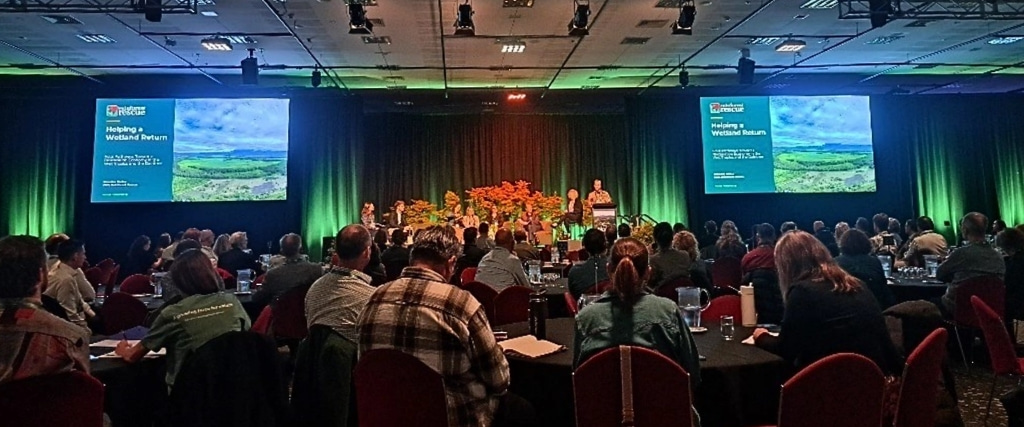
Presenting to ALCA members at this year’s conference in Nipaluna/Hobart. © Tate Brammer/Rainforest Rescue
There is something special about coming together with people who understand both the urgency of protecting nature and the possibilities ahead.
The Australian Land Conservation Alliance Conference in Nipaluna/Hobart delivered that again this year. Under the theme Nature–Climate Action: Our Opportunity to Lead, it brought together people working across conservation, First Nations land management, science, policy, business and finance.
For me, some of the most compelling conversations explored how we recognise nature’s contribution to our lives—and build the systems, investment and relationships needed to protect it.
The session “Building the case for nature” put that contribution front and centre. Healthy forests, wetlands and reefs provide the services upon which our communities and economies depend, from climate regulation to pollination and water security. That understanding needs to shape our decisions.
Geoff Manchester’s contribution particularly resonated. He really understands the connection between conservation and tourism, and the desire people have for profound experiences of nature. Those encounters can stay with us, deepen our commitment to a place and help us understand why its protection matters.
The session “Emerging and future markets, models and mechanisms” took the conversation into how we fund that work.
Dr Goslik Schepers of Eco-Markets Australia is helping move the needle for the restoration economy. Eco-Markets administers environmental credit schemes that recognise measurable, independently verified outcomes, creating opportunities to direct investment towards improvements in biodiversity and water quality. These mechanisms can help give ecological recovery an economic foundation.
These questions connect directly with Rainforest Rescue’s work.
In my presentation, Helping a Floodplain Return, I shared the Daintree Oxbow story: our ambition to reconnect approximately 600 hectares across 17 properties, restoring rainforest, wetlands, habitat and floodplain function.
That work needs nurseries, seed collectors, skilled restoration crews, science and long-term care. It also needs planning systems that enable restoration and financial arrangements that sustain it.
We are pursuing four pathways to help make that possible, spanning regulatory options, our court appeal, regional planning and local planning reform. Alongside those efforts, we are exploring how philanthropy, patient capital and emerging environmental markets can support recovery over generations.
The objective is a functioning landscape, with livelihoods and enterprise that contribute to its recovery.
It was also wonderful to see Kurt Jones, founder and CEO of Co-Exist Australia. Kurt received the 2024 Queensland Young Achiever Award in the Connecting Communities category. Co-Exist brings young people together to explore nature, build community and protect their local environments through activities including tree planting, clean-ups and habitat restoration.
What I particularly admire is his willingness to seek advice and mentorship while bringing his crew along every step of the way. Meeting that cohort is inspiring. They are already contributing, learning and leading.
We’ve got backup.
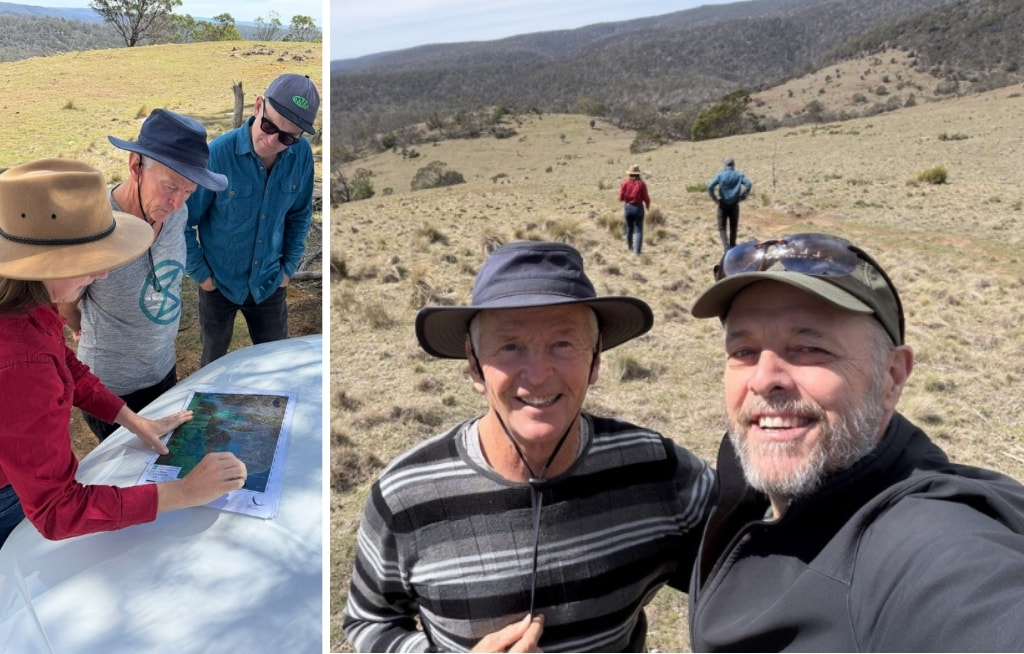
Tasmania Land Conservancy and Rainforest Rescue take to the hills. Kelvedon Hills Reserve to be specific, 2,300 hectares of high conservation land on Tasmania’s east coast. © Branden Barber/Rainforest Rescue
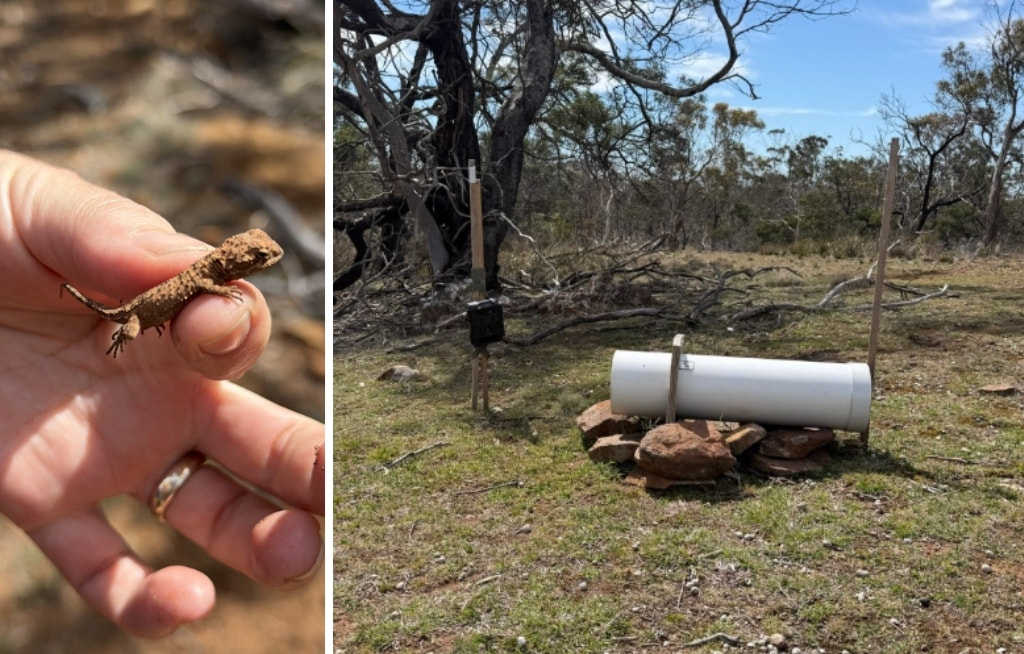
Tasmania’s only native agamid, the Mountain dragon (Rankinia diemensis), and carnivorous marsupial Spotted-tail quoll (Dasyurus maculatus) frequent the Kelvedon Hills Reserve. The latter is encouraged to breed in specially made ‘homes’ to help with conservation research. © Branden Barber/Rainforest Rescue
Out in the wild
Beyond the conference, visiting Tasmania’s remarkable Kelvedon Hills Reserve with Tasmanian Land Conservancy CEO, Dr Katherine Tuft; Rainforest Rescue’s GM, Tate Brammer; and our friend Ronald Pater, was another highlight. My thanks to Kat and the Tasmanian Land Conservancy for sharing these extraordinary places and the work involved in caring for them.
Those visits near Swansea brought the conversations about conservation, connection and long-term stewardship vividly to life.
Tassie is truly supernatural.
And there was so much more: conversations, connecting with old friends, sharing with partners, and renewed friendships and ideas to bring home. ALCA is always an inspiring experience.
Next year, the International Land Conservation Network’s Global Congress comes to Naarm/Melbourne, co-hosted by ALCA, from 26–29 October 2027.
See you there!
Branden Barber,
CEO, Rainforest Rescue
Want more good Rainforest news in your life?
Subscribe to our eNews | Follow us on Instagram | Like us on Facebook | Subscribe to our YouTube channel
Help Protect Rainforests Forever
Donate to Protect Rainforests Forever | Become a Rainforest Guardian | Partnership Options