
“Seek inspiration elsewhere”: encountering Scotland’s Celtic Rainforest
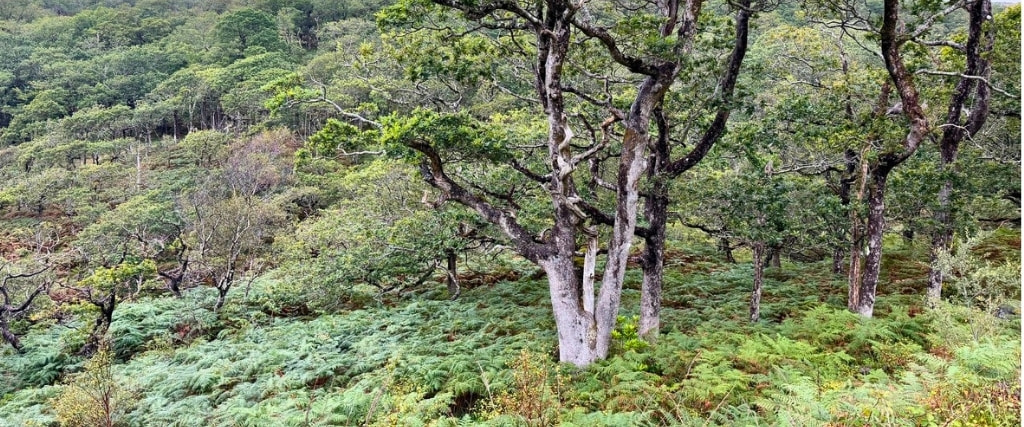
Remnant old growth Celtic Rainforest on Scotland’s west coast is a trace of a much larger habitat type that may have once stretched the length of the western British Isles. © Mark Cox/Rainforest Rescue
Why look to the other side of the world for answers about the Daintree? Because some of the most valuable ideas rarely come from staring harder at your own patch.
In early September I joined forester Chris Minty MBE, our EU-UK Senior Manager, for a field trip of meetings and site visits with people who are bringing woodland and rainforest habitat mosaics back to the British landscape, to see what they are learning that we might carry home to the Daintree.
Why go looking?
“Learn” is one of the core tenets of Rainforest Rescue’s strategy, and not only in the sense of learning about rainforests. Restoring a landscape touches ecology, culture, agriculture, policy and economics all at once, and no single organisation holds all of that knowledge. It is why we value alliances such as the Australian Land Conservation Alliance (ALCA) and the Wet Tropics Restoration Alliance, where expertise is shared rather than guarded. There is an African proverb that says, ‘if you want to go far, go together’. On this trip we took that quite literally.
Inspiration travels in both directions. When French TV crews filmed with us in the Daintree, one of them noticed parallels between the coastal forests at home in France and our own Littoral rainforest. This time, we took that same curiosity the other way.
A rainforest you might not expect
Scotland has a temperate rainforest of its own. Along the country’s west coast, isolated pockets of a once much-larger Celtic Rainforest cling on in the damp Atlantic air, and we spent time among them on the Moidart peninsula, near Arisaig. Walking quietly through this forest felt strangely familiar, the density of plant life akin to that in the Wet Tropics of Far North Queensland, or like the misty, mossy tracts of Tasmania’s Pyengana. All three are ancient habitats, with old growth remnants leaving you in awe of nature when left to its own schedule.
Elsewhere we met the people managing much larger landscapes: the team at Highlands Rewilding on Tayvallich Estate in Argyll, the estate manager at Alladale Wilderness Reserve, and the WildLand team near to Inverness. Each is working to restore how their land functions, and each is finding ways to sustainably fund this activity, from venison sales and ecotourism to the growing field of natural capital.
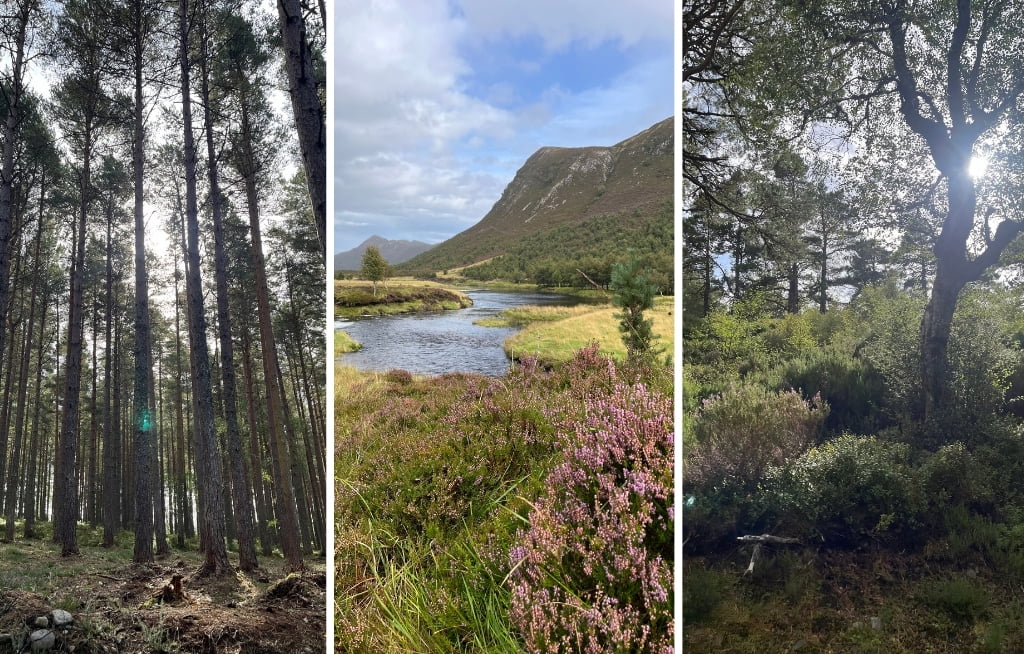
Recovering habitats, including closed Scots Pine forest with an emerging understory, open meadow and river, mixed woodland and scrubland mosaic. Management of livestock and invasive vegetation has played a large part in these places thriving, using insights from continental Europe. © Mark Cox/Rainforest Rescue
Familiar shapes, a very different forest
Across all of those conversations, similar pressures came up as the things that stop native habitat recovering: feral animals, invasive species and diseases, a changing climate and the need to recognise connectivity between habitat types. Trees are the answer, as we always say, but they need the right conditions to take hold. Plant a tree without dealing with these pressures and it may not last, which is why restoration is about much more than the planting itself.
That will sound familiar to anyone who follows our Daintree Oxbow program, where the ambition is not a single parcel of land but a whole landscape. Recovery works when connected land is restored and protected together, and when the question of what land is suitable for gets an honest answer. In the Scottish Highlands and in Far North Queensland alike, the balance between agricultural and natural land use is contested, and finding a place where both can work is as much a conversation as an ecological task.
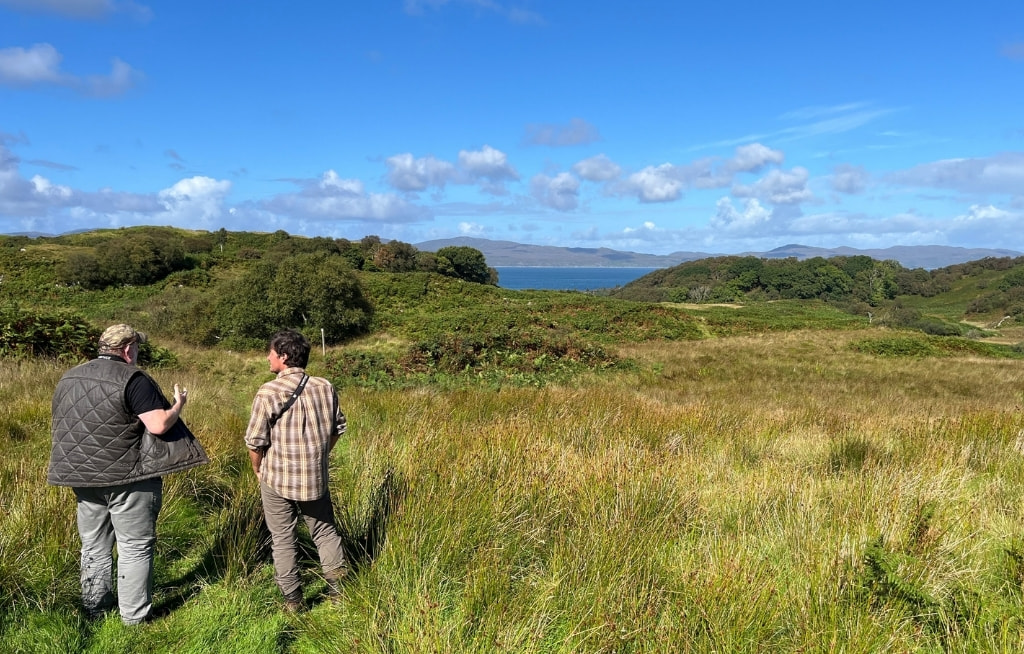
The people leading land management programs collaborate with tenant farmers, local businesses, research teams and ecologists. At Tayvallich estate we learned that this is work ‘for now and for many generations to come’, with some plans many years away from fruition. © Mark Cox/Rainforest Rescue
One commitment, many local fulfilments
Governments around the world have made shared, international promises: the UN Decade on Ecosystem Restoration, the Kunming-Montreal global biodiversity agreement, the pledge to protect 30 per cent of the planet’s land and sea by 2030.
Wherever you live, those goals belong to you as much as anyone. Australia has committed to protect 30 per cent of its land and sea by 2030 – often referred to as 30 x 30 – and to have priority degraded areas under effective restoration by then. At its conference in Hobart this October, ALCA, of which we are a member, called on the Australian Government to back that ambition with dedicated funding for large-scale restoration.
These promises are only ever met locally, in a particular catchment, with particular neighbours and particular constraints. Some of those challenges are unique to a place. Many are universal. Standing in a Scottish glen, hearing a different set of problems from the ones we face in the Daintree yet still recognising their shape, was a powerful reminder of that.
One idea ran through every place we visited: the recovery of nature and the wellbeing of the people who live and work alongside it are tied together. At Tayvallich, ecotourism helps fund the restoration of habitat and contributes to the local economy. Back in the Wet Tropics, the Oxbow will truly succeed if the community around it can see itself in the recovery too.
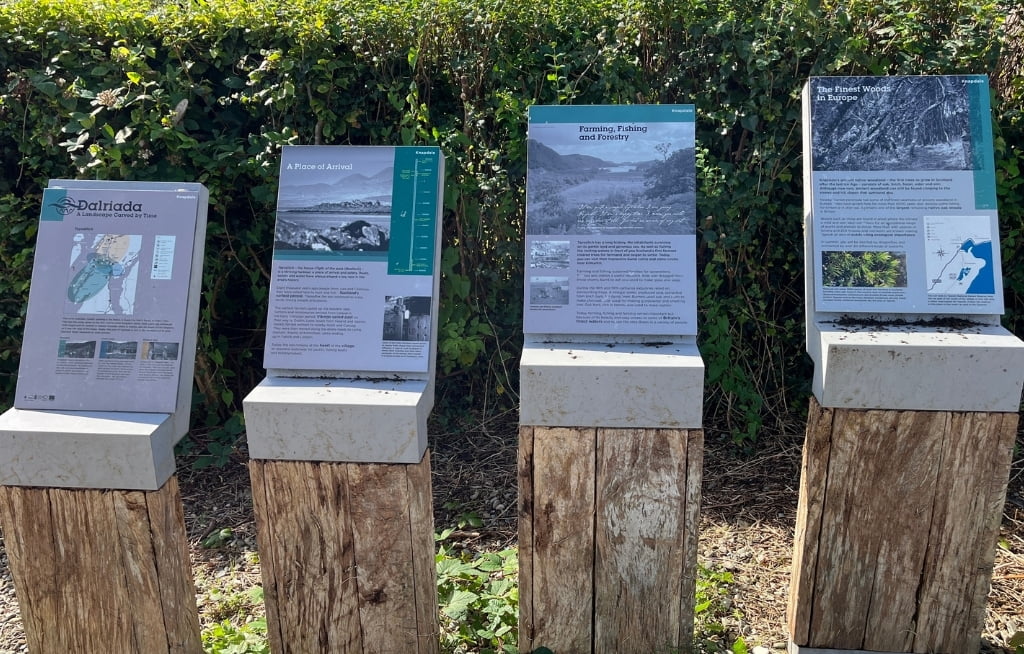
The ever-changing relationship between people, land and nature is a reminder that this dynamic has a deep history and a future that we are able to shape, however we choose to do so. © Mark Cox/Rainforest Rescue
What comes next
We left the Celtic Rainforest with more questions than answers, which is exactly how it should be. The conversations reinforced something we already know: restoring nature is never simply about trees. It’s about landscapes, livelihoods, relationships and the willingness to keep learning.
We’ll continue exploring what these experiences might mean for the Daintree Oxbow, and sharing that thinking as it develops.
#TreesAreTheAnswer
By Mark Cox, Communications Manager, Rainforest Rescue
Mark currently lives in east Devon in the UK, making the trip to Scotland a little easier!
Want more good Rainforest news in your life?
Subscribe to our eNews | Follow us on Instagram | Like us on Facebook | Subscribe to our YouTube channel
Help Protect Rainforests Forever
Donate to Protect Rainforests Forever | Become a Rainforest Guardian | Partnership Options