
Critter Corner – Macleay’s Honeyeater
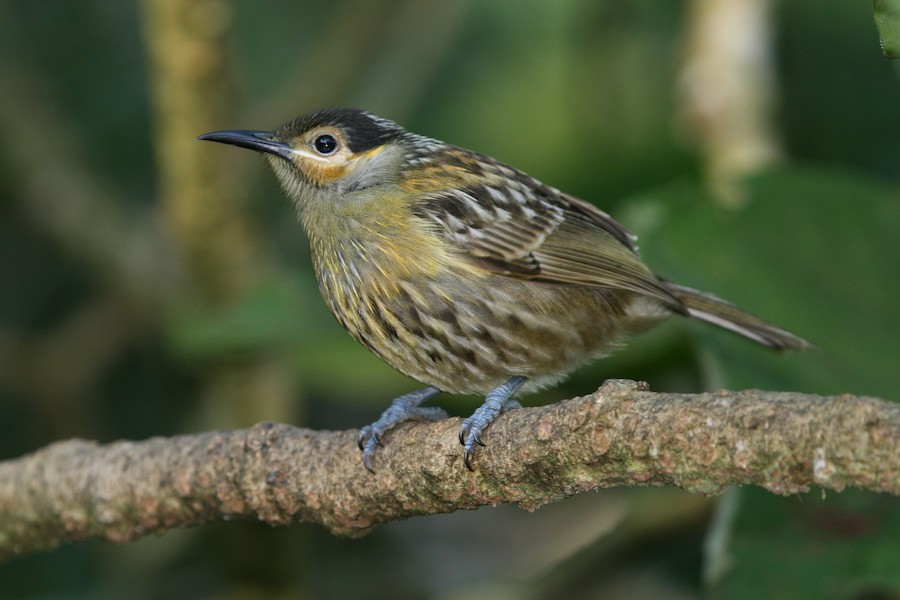
#CritterCorner – Not every rainforest bird announces itself with bright colours or dramatic displays. Some quietly go about their work, helping keep the forest alive one flower at a time.
The Macleay’s Honeyeater (Xanthotis macleayanus) is a rainforest specialist found only in Australia. Its range stretches from Cooktown south to the Paluma Range in North Queensland, where it inhabits tropical rainforests and nearby forest habitats.
A medium-sized honeyeater, the Macleay’s Honeyeater is beautifully marked with earthy tones that help it blend into the rainforest. Its brown plumage is dotted with small white speckles on the back of the neck and larger white spots across the back. Olive-coloured underparts are streaked with white, while a distinctive black cap, grey throat and hints of orange and yellow around the eyes complete its striking appearance.
Although often heard before it is seen, the Macleay’s Honeyeater is an active and conspicuous member of the rainforest bird community. Its cheerful calls frequently echo through the forest as it moves through the canopy and understory in search of food.
Listen here:
Like many honeyeaters, nectar forms an important part of its diet. It also feeds on insects and fresh fruits, giving it a varied menu throughout the year. As the bird moves from flower to flower gathering nectar, pollen is transferred between plants, helping many rainforest species reproduce.
This makes the Macleay’s Honeyeater more than just a visitor to flowering trees. It is an important pollinator, supporting the health and diversity of the rainforest ecosystem.
While information about their breeding behaviour is less commonly observed than some other rainforest birds, Macleay’s Honeyeaters are known to build cup-shaped nests and raise their young within the shelter of forest vegetation.
The Macleay’s Honeyeater is currently listed as Least Concern on the IUCN Red List, and its population is considered stable.
Although it is not currently considered threatened, the Macleay’s Honeyeater depends on healthy forest habitat for food, shelter and breeding sites. Protecting and restoring rainforest helps ensure these birds can continue carrying pollen between flowers and supporting the plants that make up the rainforest itself.
The next time you hear a cheerful call drifting through the rainforest, take a moment to look up. You might just spot one of the forest’s quiet pollinators at work.
Fun Facts About the Macleay’s Honeyeater
- Found Only in Australia: The Macleay’s Honeyeater is endemic to Australia and occurs only in North Queensland.
- A Rainforest Pollinator: While feeding on nectar, it helps pollinate rainforest plants.
- Fashionably Dressed: Its black cap, white speckles and olive-streaked underparts make it one of the more distinctive rainforest honeyeaters.
- Fruit, Insects and Nectar: It enjoys a varied diet that changes with seasonal food availability.
- A Cheerful Songster: Its calls are a familiar sound in many Wet Tropics forests.
References
- Atlas of Living Australia
- BirdLife International
- eBird.org
- Image courtesy of James (Jim) Holmes
- Audio courtesy of Animalia
Want more good Rainforest news in your life?
Subscribe to our eNews | Follow us on Instagram | Like us on Facebook | Subscribe to our YouTube channel
Help Protect Rainforests Forever
Donate to Protect Rainforests Forever | Become a Rainforest Guardian | Partnership Options