Critter Corner – Diadem Leaf-nosed Bat
#CritterCorner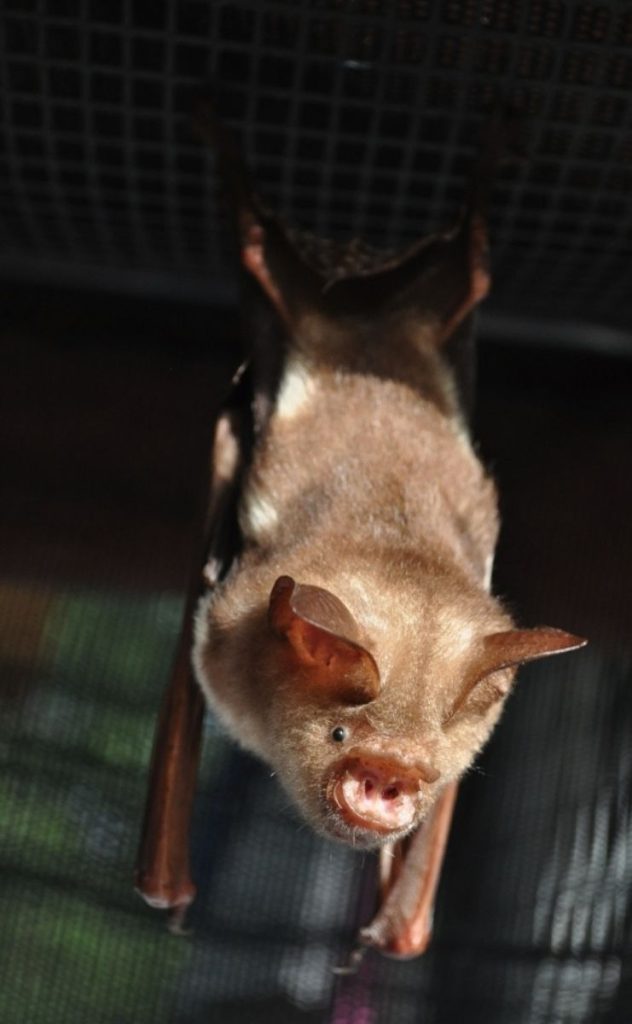 – Deep within the rainforests of north-eastern Queensland lives one of Australia’s most striking bats: the Diadem Leaf-nosed Bat (Hipposideros diadema reginae).
This remarkable bat is the Australian subspecies of the widespread Hipposideros diadema, but H. d. reginae occurs only in Queensland, from Cape York south to Townsville and inland to areas such as Chillagoe. With its distinctive nose-leaf, powerful bite and unusual hunting behaviour, this microbat plays an important role in maintaining balance within rainforest ecosystems.
The Diadem Leaf-nosed Bat takes its name from the elaborate folds of skin on its nose, which resemble a crown or diadem. These structures are not decorative. They help shape and direct the bat’s echolocation calls, allowing it to detect insects with remarkable precision in the darkness.
Weighing between 32 and 57 grams and with a wingspan reaching about 40 centimetres, it is the largest Hipposideros species in Australia. Individuals usually have pale grey to light brown fur, often with buffy spots on the shoulders and belly, although some colonies include striking orange-coloured individuals.
Unlike many bats that chase insects continuously while flying, the Diadem Leaf-nosed Bat often uses a technique known as perch hunting. Hanging quietly from a branch, cave wall or culvert, it sends out echolocation calls and listens for the movement of insects nearby. When prey passes within range, the bat launches into a quick flight to capture it before returning to its perch to eat.
These bats are formidable insect hunters. Their strong jaws and large teeth allow them to crush hard-shelled insects such as scarab beetles and click beetles that other bats may struggle to eat.
By feeding on large numbers of insects each night, the Diadem Leaf-nosed Bat helps regulate insect populations and maintain balance within rainforest ecosystems. Just as cassowaries are often described as rainforest gardeners for spreading seeds, insect-eating bats like this one quietly support the health of the forest by keeping insect numbers in check.
Across northern Queensland, Diadem Leaf-nosed Bats roost year-round in caves, disused mines, culverts, buildings and occasionally tree hollows. They tend to favour large chambers with warm, humid conditions and high domed ceilings. Colonies may range from solitary individuals to groups of more than 250 bats, with each animal hanging separately and keeping a small distance from its neighbours.
Because many roost sites are located in caves or other accessible places, disturbance can pose a serious threat. Human visits, mining activities and habitat clearing can cause colonies to abandon their roosts.
In Queensland, Hipposideros diadema reginae is currently listed as Near Threatened under the Nature Conservation Act. Protecting roost sites and surrounding habitat is essential to ensuring this distinctive rainforest bat continues to thrive.
The Diadem Leaf-nosed Bat is more than a rainforest curiosity, it’s a guardian of balance in one of the world’s richest ecosystems.
Fun Facts About the Diadem Leaf-nosed Bat
- Royal Nose: The elaborate nose-leaf acts like a crown, but its true purpose is focusing echolocation calls.
- Big for a Microbat: With a wingspan up to 40 cm, it is among Australia’s largest microbats.
- Hard-shelled Snackers: Their strong jaws allow them to eat beetles most other bats can’t manage.
- Perch Hunters: They often wait silently for insects before making a quick aerial strike.
- Colourful Coats: While most are pale brown, some colonies feature striking orange individuals.
References
- Photo courtesy of Tolga Bat Hospital
- Australian Museum – Diadem Leaf-nosed Bat (Hipposideros diadema)
- Queensland Government – Hipposideros diadema reginae species profile (PDF)
- Tolga Bat Hospital – Special Microbats: Diadem Leaf-nosed Bat
Want more good Rainforest news in your life?
Subscribe to our eNews | Follow us on Instagram | Like us on Facebook | Subscribe to our YouTube channel
Help Protect Rainforests Forever
Donate to Protect Rainforests Forever | Become a Rainforest Guardian | Partnership Options