Troubled Waters: The Daintree Rainbowfish
Deep within the Daintree’s rainforest streams lives a small fish with a very big story to tell.
The Daintree rainbowfish (Cairnsichthys bitaeniatus) is found nowhere else on Earth. Its entire existence depends on a handful of freshwater habitats in Far North Queensland, making it particularly vulnerable when environmental conditions change.
Now, new research led by Griffith University’s Australian Rivers Institute has revealed just how precarious its future may be.
In an assessment of 22 rare, endemic and threatened freshwater fish species across the Wet Tropics, researchers identified the Daintree rainbowfish as particularly vulnerable to a range of pressures, including rising water temperatures, altered stream flows, invasive species and habitat degradation.
The findings are a timely reminder that the extraordinary biodiversity of the Wet Tropics isn’t confined to the rainforest canopy. Beneath the surface of its rivers and streams lives an equally remarkable — and often overlooked — world.
We’re sharing this research because protecting rainforest also means understanding and caring for the intricate freshwater ecosystems that sustain it.
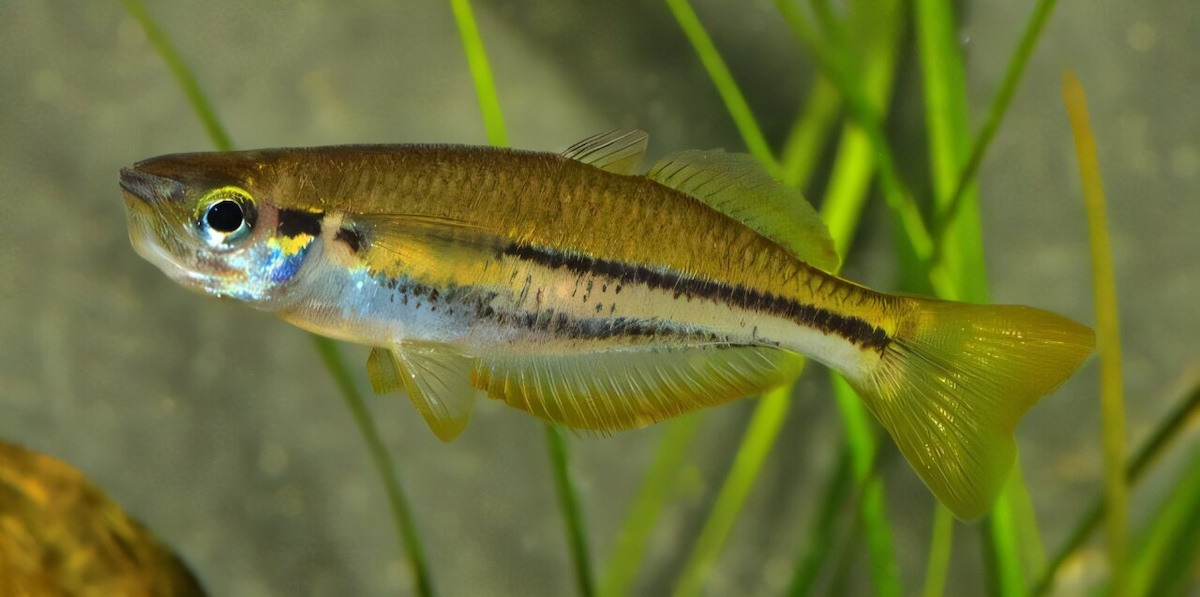
The study found the species facing the highest risk was the Daintree rainbowfish (Cairnsichthys bitaeniatus), found only in small rainforest streams in the Daintree region in Far North Queensland. Image credit, Keith Martin
Warmer waters, pest species and habitat loss major threats to small, rare freshwater fish
One of Australia’s most comprehensive assessments of endemic, rare or threatened freshwater fish has found numerous species are at severe risk of extinction because of multiple threats, including habitat loss, invasive species and warmer waters.
The species facing the highest risk was the diminutive Daintree rainbowfish (Cairnsichthys bitaeniatus), found only in small rainforest streams in the Daintree region in Far North Queensland, with up to 10 unique threats to its population.
“These freshwater fish species are unique,” lead author Dr. Kaitlyn O’Mara said. “Many are found nowhere else on Earth. If they are lost from the Wet Tropics, they become globally extinct. Freshwater fish are also important components of stream ecosystems and are indicators of ecosystem health. Their decline signals broader environmental deterioration.”
The study of 22 freshwater fish species across the entire Wet Tropics region was led by Griffith University’s Australian Rivers Institute and published in the journal Pacific Conservation Biology. The team of 18 experts—representing Australian universities, government agencies, consultancies and regional natural resource management organizations—assessed published and gray literature, conservation listings and previous research on species biology, distribution and threats to identify the species most at risk and the actions needed to save them.
They assessed 24 separate threats, ranging from climate change and invasive species to water extraction, habitat degradation and hybridization. For every species, they considered not only the threat itself but also its likelihood, consequence, extent, timing, trend and confidence level before assigning risk ratings.
“You can’t save what you can’t see, so understanding the risks posed by historical, emerging and intensifying threats to these species is critical to addressing a knowledge gap that has hindered conservation planning,” O’Mara said.
“Extreme climate events, altered river flows, habitat clearing, poor water quality, invasive fish and hybridization with introduced native fish are high-risk threats to many species, but the species with the smallest ranges or lowest numbers were the most vulnerable.”
Highest risk species
- Daintree rainbowfish (Cairnsichthys bitaeniatus)
- Cairns rainbowfish (Cairnsichthys rhombosomoides)
- Malanda rainbowfish (Melanotaenia sp. nov. “Malanda”)
- Lake Eacham rainbowfish (Melanotaenia eachamensis)
- Utchee rainbowfish (Melanotaenia utcheensis)
Other highly threatened species
- Bloomfield River cod (Guyu wujalwujalensis)
- Mulgrave goby (Glossogobius bellendenensis)
- Several cling gobies, including: Opal cling goby, Emerald cling goby, Black Stiphodon, Orange cling goby, Discord goby, Fehlmann’s Sicyopus, and Frog goby
The assessment identified invasive species, climate-driven changes to temperature and hydrology, habitat and water quality degradation, and hybridization with translocated native fishes as among the most severe threats, particularly for narrowly distributed rainbowfishes and migratory cling gobies.
The research team called for urgent conservation planning and recovery actions, such as habitat restoration, invasive species control, improved riparian management and captive breeding.
“We hope our study can inform the development of a multi-species recovery action plan to guide on-ground management, reverse declines and help recover these unique fish species,” said project leader Professor Mark Kennard.

Every Stream Has a Story
Rainforests are more than trees. They’re living systems of rivers, streams, wetlands, soils, plants and wildlife, connected in ways we are still learning to understand. For a species like the Daintree rainbowfish, changes to a small stretch of freshwater habitat can have consequences far beyond what we might notice from the riverbank.
The researchers highlight a range of conservation responses, from protecting and restoring freshwater habitats to improving riparian vegetation management, controlling invasive species and developing targeted recovery strategies.
At Rainforest Rescue, we know that healthy landscapes depend on these connections. Protecting rainforest, restoring degraded habitat and caring for the places where land and water meet are all part of building more resilient ecosystems.
The Daintree rainbowfish reminds us that some of the most extraordinary lives in the rainforest are also among the easiest to overlook. And that understanding what we stand to lose is often the first step towards protecting it.
Want more good Rainforest news in your life?
Subscribe to our eNews | Follow us on Instagram | Like us on Facebook | Subscribe to our YouTube channel
Help Protect Rainforests Forever
Donate to Protect Rainforests Forever | Become a Rainforest Guardian | Partnership Options