Critter Corner – Rufous Owl
#CritterCorner – You could spend plenty of time exploring the rainforests of Far North Queensland without ever laying eyes on a Rufous Owl (Ninox rufa).
 These elusive birds can be remarkably difficult to spot, even when they’re nearby. Sometimes, the clues are on the ground instead. Pellets, fur, feathers and other prey remains beneath a favourite roost can reveal where an owl has been resting and even offer clues about what it has been eating.
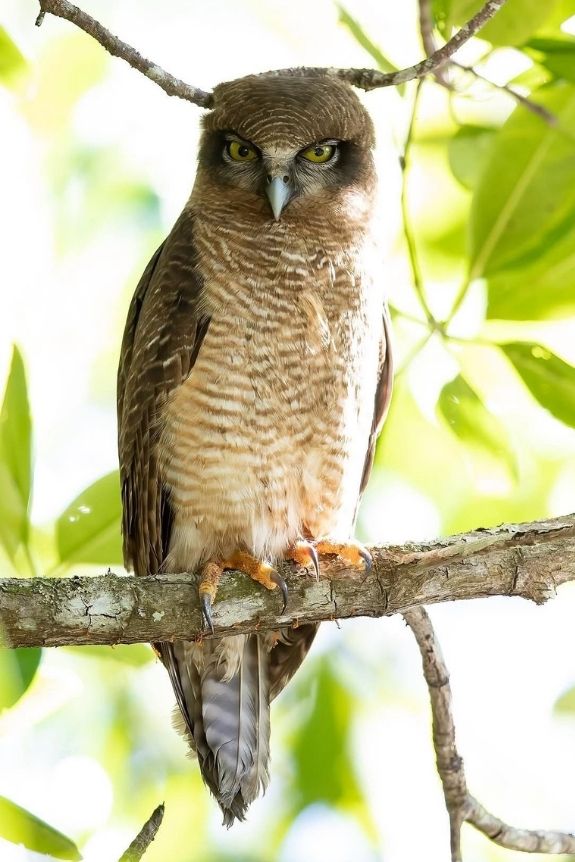
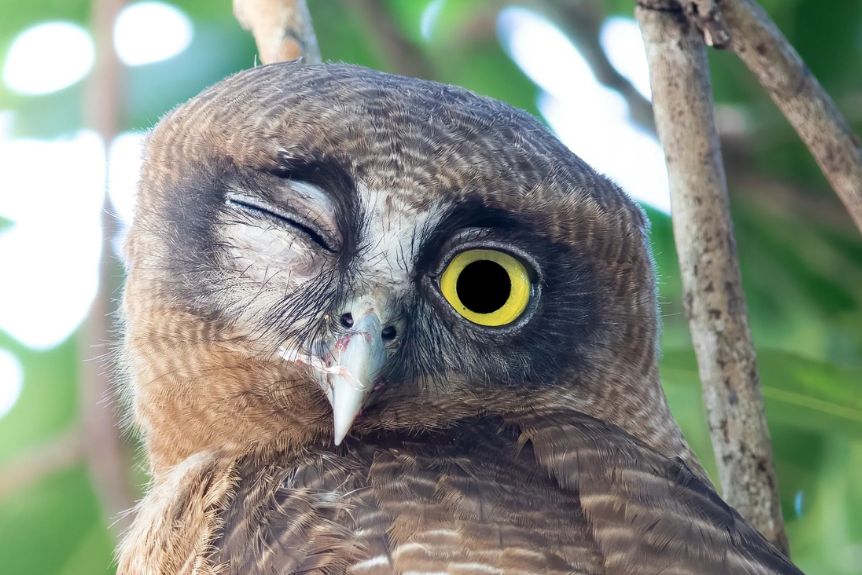
Rufous Owls are Australia’s second-largest owl species behind the Powerful Owl (Ninox strenua). Their rufous-brown plumage gives them their name, while striking yellow eyes, dark eye patches and strong feet and talons make them unmistakable up close. In the Wet Tropics, including the Daintree, the subspecies we encounter is Ninox rufa queenslandica.
They make their homes across a range of forest habitats, including tropical rainforest, sclerophyll forest and woodland, as well as Melaleuca forests lining waterways. These forests provide the places Rufous Owls need to shelter, breed and hunt.
And once darkness falls, these impressive birds get to work.
Rufous Owls are formidable nocturnal hunters with a surprisingly varied diet. Research in north Queensland has recorded mammals, birds and invertebrates among their prey, with mammals making up the largest portion of the diet during one breeding-season study in Cairns. Their prey can include flying-foxes, possums and other arboreal mammals, as well as birds and large insects.
That varied menu tells us something important about life as a rainforest predator. Rather than relying on a single prey species, Rufous Owls can hunt across different levels of the forest and take advantage of the animals available around them. Research from Cape York describes them as versatile and opportunistic hunters, with their diet changing between different rainforest regions.
When it comes time to breed, mature trees become particularly important. Rufous Owls nest in large tree hollows, places that can take many decades to form. Once an old hollow-bearing tree disappears, another cannot simply replace it in a few years.
This dependence on mature trees ties the Rufous Owl closely to the forest around it. Protecting rainforest doesn’t just keep somewhere for an owl to perch. It keeps nesting hollows standing and maintains the complex forest habitat that supports the animals Rufous Owls depend on for food.
In Queensland, the Wet Tropics subspecies, Ninox rufa queenslandica, is currently listed as Least Concern. Further north, the Cape York subspecies, Ninox rufa meesi, is listed as Near Threatened.
Even where a species isn’t currently considered threatened, protecting its habitat matters. Keeping mature trees standing and rainforest connected helps preserve the places Rufous Owls need to roost, breed and hunt, along with the wider web of rainforest life around them.
You may never spot a Rufous Owl staring down from the canopy. But finding the signs one has left behind is a reminder that, somewhere above, one of the rainforest’s formidable nocturnal hunters may be closer than you think.
Fun Facts about the Rufous Owl
- Second Only to the Powerful: The Rufous Owl is Australia’s second-largest owl species, behind the Powerful Owl.
- Clues Below: Pellets and prey remains beneath roosts can help researchers work out what Rufous Owls have been eating.
- Quite the Menu: Rufous Owls have been recorded eating mammals, birds and invertebrates, including flying-foxes and possums.
- Parrot Predator: At Iron Range National Park on Cape York Peninsula, researchers documented Eclectus Parrots among the prey of Rufous Owls. The researchers cautioned that their observations came from a single owl nest, but the discovery gives us a remarkable glimpse into just how capable these hunters can be.
- Daintree Resident: The Rufous Owls found in the Wet Tropics belong to the southern subspecies, Ninox rufa queenslandica.
- Hollow Homes: Rufous Owls nest in large tree hollows, making mature forest an important part of their habitat.
References
- Images courtesy of Matt Cornish
- Australian Geographic – The owls of Australia
- Goulding, W. & Venables, B. (2012) – Rufous Owl (Ninox rufa) diet and breeding in an urban forest remnant in north-eastern Queensland, The Sunbird 42(1): 1–10
- Legge, S., Heinsohn, R., Blackman, C. & Murphy, S. (2003) – Predation by Rufous Owls on Eclectus Parrots and other animals at Iron Range National Park, Cape York, Corella 27(2): 45–46
Want more good Rainforest news in your life?
Subscribe to our eNews | Follow us on Instagram | Like us on Facebook | Subscribe to our YouTube channel
Help Protect Rainforests Forever
Donate to Protect Rainforests Forever | Become a Rainforest Guardian | Partnership Options