Forest Flora – Saw Sedge
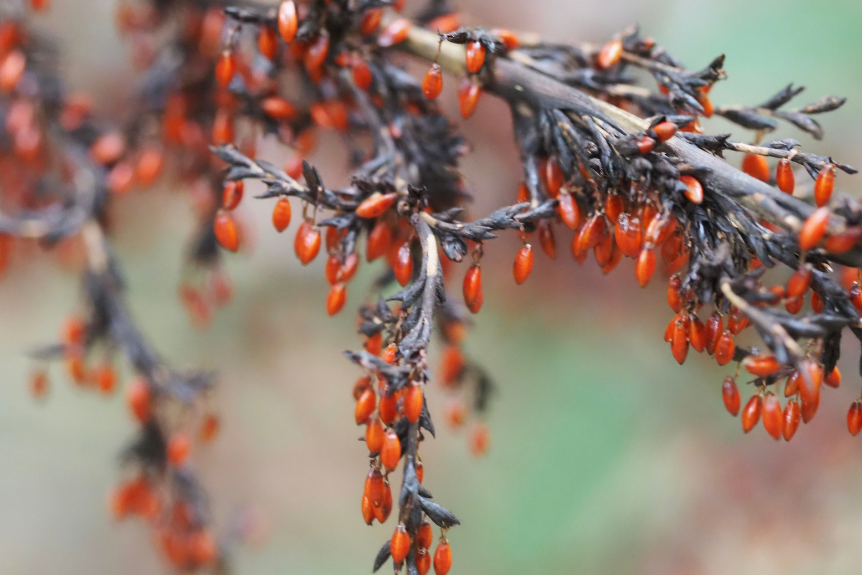
#ForestFlora – Meet Saw Sedge (Gahnia clarkei), a native Australian sedge found in moist habitats along the east coast, including parts of the Wet Tropics. Its long, arching leaves form dense clumps, while tall reddish-brown seed heads rise above the surrounding vegetation, creating a striking contrast against the rainforest greenery.
Despite its common name, Saw Sedge isn’t actually a grass. It belongs to the sedge family, Cyperaceae, a group of plants well adapted to life in wet environments. The name “Saw Sedge” comes from the tiny serrations along the edges of its leaves. Brush against them the wrong way and you’ll quickly discover how it earned its name.
At first glance, Saw Sedge doesn’t look particularly remarkable. It has no bright flowers, no towering trunk and no spectacular fruit. Yet growing quietly along creek banks, wetlands and damp forest margins is a plant that helps support a surprising amount of life.
One of the most remarkable stories unfolding among those leaves involves a butterfly.
For the Varied Sword-grass Brown butterfly (Tisiphone abeona), Saw Sedge is more than a plant. It’s a nursery. Female butterflies lay their eggs on the foliage, and once the caterpillars hatch, they feed on the leaves as they grow. Without suitable host plants like Saw Sedge, the next generation of butterflies would never get off the ground.
This close relationship highlights how interconnected rainforest ecosystems really are. A plant that many people walk past without noticing can be essential to the survival of another species.
Saw Sedge is also well suited to life in damp environments. Its dense growth helps stabilise soil along waterways and provides shelter for a variety of small animals and insects. When its seeds mature, they become a food source for seed-eating birds and other wildlife.
At present, Saw Sedge is not listed as threatened under Queensland conservation legislation. However, like many native species, it relies on healthy wetlands, waterways and forest habitats to thrive.
Protecting rainforest and wetland habitats means protecting the countless relationships that exist within them. From supporting butterfly caterpillars to providing food and shelter for wildlife, Saw Sedge is a reminder that even the most unassuming plants can play an important role in the natural world.
Next time you spot a clump of Saw Sedge beside a creek or wet forest track, take a closer look. You might be standing beside the beginning of a butterfly’s life story.
Fun Facts about Saw Sedge
- Not Actually a Grass: Despite its appearance, Saw Sedge belongs to the sedge family, not the grass family.
- Sharp by Nature: Tiny serrations along the leaf edges give the plant its common name.
- A Butterfly Nursery: Saw Sedge is a host plant for the Varied Sword-grass Brown butterfly.
- Built for Wet Places: It thrives along creek banks, wetlands and other damp habitats.
- Striking Seed Heads: Its tall reddish-brown seed heads can stand out beautifully against surrounding rainforest vegetation.
References
- Image courtesy of Kate Koel
- Sunshine Coast Council Botanic Garden
Want more good Rainforest news in your life?
Subscribe to our eNews | Follow us on Instagram | Like us on Facebook | Subscribe to our YouTube channel
Help Protect Rainforests Forever
Donate to Protect Rainforests Forever | Become a Rainforest Guardian | Partnership Options