Critter Corner – Hercules Moth
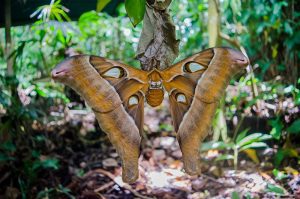
#CritterCorner – Imagine spending your entire adult life searching for a mate, without eating a single meal.
That is exactly how the Hercules Moth (Coscinocera hercules) lives.
Found in the tropical rainforests of Far North Queensland and New Guinea, the Hercules Moth is the largest moth in Australia and one of the largest moths in the world. Its impressive wings can span more than 25 centimetres, and the largest recorded individual had a wingspan of 36 centimetres.
Despite their enormous size, adult Hercules Moths live for only 10 to 14 days. Their brief lives are devoted almost entirely to reproduction. In fact, adult moths do not eat at all. They emerge from their cocoons without functioning mouthparts and survive entirely on the energy reserves they stored as caterpillars.
The caterpillar stage makes up the majority of a Hercules Moth’s life. For around three months, the larvae feed on rainforest plants including Bleeding Heart (Homalanthus novoguineensis), Red Bean (Dysoxylum mollissimum subsp. molle) and Cheese Tree (Glochidion ferdinandi). During this time, they can grow to an astonishing 14.5 centimetres in length and weigh up to 45 grams.
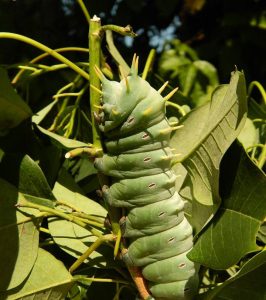
Pale green with distinctive yellow spikes and spots, Hercules Moth caterpillars are almost as impressive as the adults they will become.
Once they emerge from their cocoons, both male and female moths display beautiful brown wings marked with transparent “windows” and pale triangular edges. Females are generally larger, while males can be recognised by the long tail-like extensions on their hindwings.
Finding a mate quickly is critical when your adult life lasts only a couple of weeks. Female Hercules Moths release powerful pheromones that can attract males from more than two kilometres away, helping them locate each other within the vast rainforest landscape.
Although Hercules Moths are not currently considered threatened, they depend on healthy rainforest habitat and the native plants their caterpillars feed upon. Protecting rainforest ecosystems helps ensure future generations can complete their remarkable life cycle, from hungry caterpillar to giant moth.
The Hercules Moth reminds us that some of the rainforest’s most extraordinary residents are not always the largest animals or loudest voices. Sometimes, they are found quietly resting beneath a leaf, waiting for the next stage of an incredible transformation.
Fun Facts About the Hercules Moth
- No Mouth, No Meals: Adult Hercules Moths do not eat because they emerge without functioning mouthparts.
- Australia’s Largest Moth: The Hercules Moth is the largest moth species found in Australia.
- Record Breaker: The largest recorded Hercules Moth had a wingspan of 36 centimetres.
- Long-Distance Romance: Males can detect a female’s pheromones from more than two kilometres away.
- Big Wings: Hercules Moths have the largest documented wing surface area of any living insect, reaching around 300 square centimetres.
References
- Wet Tropics Management Authority
- Images courtesy of the Australian Butterfly Sanctuary
Want more good Rainforest news in your life?
Subscribe to our eNews | Follow us on Instagram | Like us on Facebook | Subscribe to our YouTube channel
Help Protect Rainforests Forever
Donate to Protect Rainforests Forever | Become a Rainforest Guardian for as little as $2 a month | Partnership Options