Critter Corner – Southern Cassowary
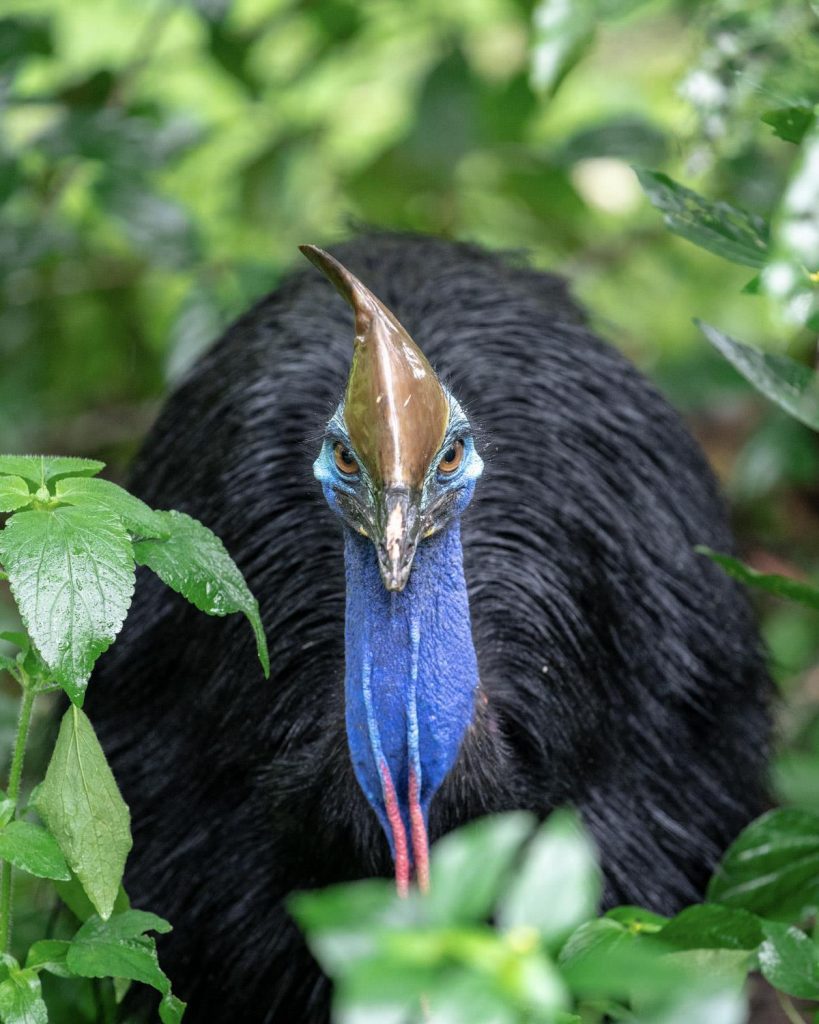
#CritterCorner – Imagine the Daintree Rainforest without cassowaries.
Many of the towering trees, dense foliage and incredible diversity of plants that make the Wet Tropics so special would struggle to regenerate. That’s because the Southern Cassowary is much more than an iconic rainforest bird. It is one of the rainforest’s most important gardeners.
The Southern Cassowary (Casuarius casuarius johnsonii) is one of Far North Queensland’s most important rainforest animals. Adult cassowaries typically stand between 1.5 and 1.8 metres tall. Females are larger than males and can weigh up to 70 kilograms, while males rarely exceed 50 kilograms.
The Southern Cassowary’s main food source is rainforest fruit. In fact, cassowaries are known to eat the fruit of at least 238 plant species, including 149 woody rainforest tree species. Of these, 45 produce large fruits that are dispersed over long distances primarily by cassowaries.
This is one of the reasons cassowaries are considered a keystone species.
Unlike many animals, cassowaries swallow fruit whole. Their primitive digestive system allows seeds to pass through relatively unharmed before being deposited elsewhere in nutrient-rich dung. Every pile of cassowary poo has the potential to help grow new rainforest.
Many rainforest plants depend on cassowaries to move their seeds through the landscape. Without them, the structure and diversity of the rainforest would be permanently changed.
When it comes to raising a family, the male cassowary takes on the role of primary carer. After laying her eggs, the female departs, leaving the male to incubate the eggs. Once the chicks hatch, he continues caring for them until they are between 18 months and two years old.
Despite their importance, Southern Cassowaries face numerous threats. Habitat loss, fragmentation and degradation reduce the amount of suitable rainforest available and make it more difficult for cassowaries to move safely through the landscape. Vehicle strikes, dog attacks, disease, natural disasters such as cyclones, and climate change all place additional pressure on populations.
The Australian subspecies is listed as Endangered under the *Environment Protection and Biodiversity Conservation Act 1999*.
Protecting rainforest habitat helps ensure cassowaries can continue their vital role as rainforest gardeners. In turn, cassowaries help maintain the diversity, health and resilience of the rainforest by dispersing seeds and supporting regeneration. Protecting rainforest helps ensure cassowaries have a future. Protecting cassowaries helps ensure the rainforest does too.
Fun Facts About the Southern Cassowary
- What’s in a Name? The name “Cassowary” comes from the Papuan Malay words *kasu* (“horned”) and *weri* (“head”), referring to the distinctive casque on top of the bird’s head.
- One of these things is not like the other: While the Southern Cassowary (Casuarius casuarius) can also be found in New Guinea, the Australian subspecies (Casuarius casuarius johnsonii) occurs only in Far North Queensland.
- Super Dad: After the female lays her eggs, the male incubates them and cares for the chicks for up to two years.
- More Than a Helmet: Research from La Trobe University suggests the cassowary’s distinctive casque may help regulate body temperature by releasing heat. Read more here.
- Ancient Origins: Cassowaries belong to the ratite family of flightless birds and have ancient evolutionary origins.
References
- Rainforest Rescue – Save the Cassowary
- Rainforest Rescue – Cassowary Ecology & Habitat
- Queensland Government – Southern Cassowary Conservation
- Community for Coastal & Cassowary Conservation (C4)
- Image courtesy of Martin Stringer Photography
Want more good Rainforest news in your life?
Subscribe to our eNews | Follow us on Instagram | Like us on Facebook | Subscribe to our YouTube channel
Help Protect Rainforests Forever
Donate to Protect Rainforests Forever | Become a Rainforest Guardian for as little as $2 a month | Partnership Options