Why Restoring Rainforests Matters for Science
Thanks to the ongoing generosity of our supporters, Rainforest Rescue is proud to be able to provide ‘living laboratories’ to scientific researchers, through access to protected and restored areas of Australian tropical lowland rainforest. Here, Dr Baptiste Wijas explains why these places matter for deepening our understanding of the rainforest.
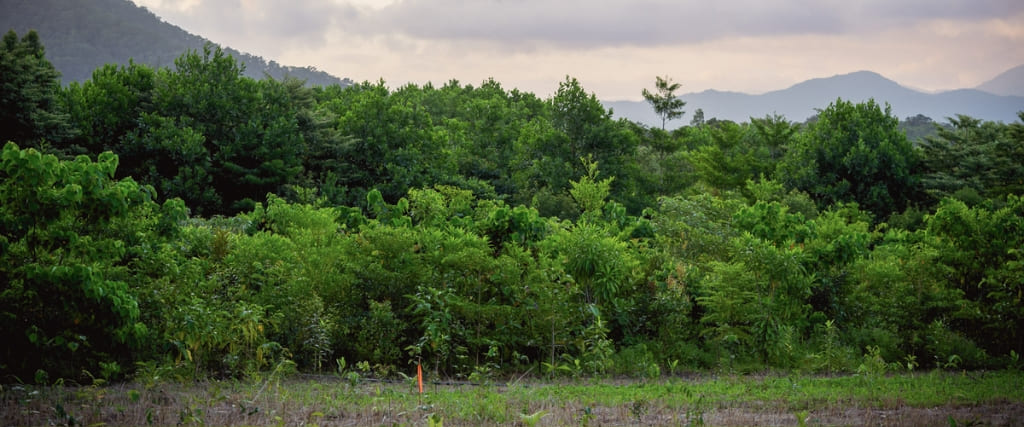
Long-term rainforest restoration projects like the NightWings Rainforest Centre site are a vital way for researchers to create a ‘timeline’ of habitat recovery © Martin Stringer
Rainforests are disappearing at an alarming rate. More than any other biome on Earth, they have been shaped, and often damaged, by human activity. This loss is especially troubling because rainforests are among the most biologically rich places on the planet. They are home to remarkable species such as the tree kangaroos of Australia’s Daintree, and they provide vital services for all of us. Sometimes called the “lungs of the Earth,” rainforests absorb carbon dioxide and help regulate our climate.
More than any other biome on Earth, rainforests have been shaped, and often damaged, by human activity.
Dr Baptiste Wijas, Environmental Ecologist
When rainforests are cleared, the land usually changes dramatically. Forests may be turned into pasture for livestock or fields of single crops. In some cases, however, cleared land is abandoned or purchased for conservation by organisations such as Rainforest Rescue. Over time, trees can return, and forests begin to grow again. These regrowing forests are known as secondary forests. They look very different from untouched, or primary, rainforests and host different plants and animals. Their recovery is slow and complex, often taking centuries. As secondary forests become more common worldwide, it is crucial to understand how they develop and whether they can ever fully recover.
This is where science plays a key role. To understand rainforest recovery, researchers compare plants, animals, and ecosystem processes in primary forests with those in secondary forests at different stages of regrowth. By studying forests that have been recovering for just a few years alongside those that have been regrowing for decades, we can piece together a timeline of recovery. Rainforest Rescue makes this work possible by restoring and protecting land that would otherwise remain degraded, creating living laboratories where scientists can study how rainforests heal over time.
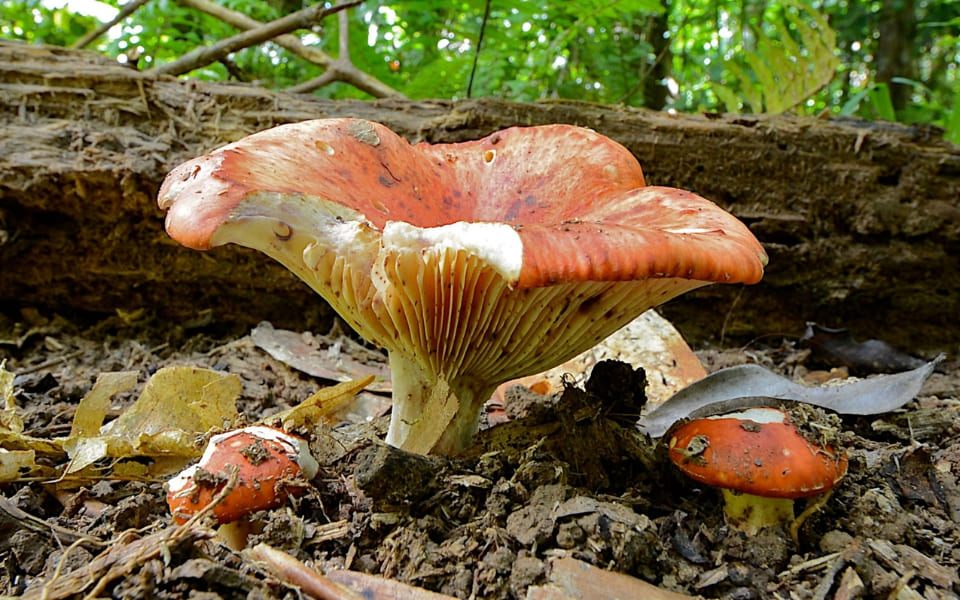
Evidence of fungal decay provides comparative insights into decomposition in old and secondary growth rainforests © Martin Stringer
My own research takes place in the lowland tropical rainforests of Australia, which were largely cleared after European colonisation. Many remaining protected rainforests are located on steep or hard-to-reach terrain. In contrast, the lowland forests protected by Rainforest Rescue provide a rare and valuable opportunity to study rainforest recovery where it matters most. Working with Rainforest Rescue, we set up an experiment to measure how dead wood decomposes across several restored sites. Decomposition is an important ecosystem process because it influences how much carbon dioxide a forest releases back into the atmosphere. This work has given us new insights into how well key ecosystem functions recover as rainforests regrow (with more details available in a previous article).
At a time when humanity is facing the growing challenges of climate change, understanding how recovering rainforests can help store carbon and support healthy ecosystems is more important than ever.
Rainforest Rescue’s work does more than protect the beauty and biodiversity of Australia’s rainforests; it also supports vital scientific research that improves our global understanding of how rainforests function and how we can help them recover.
Authored by Dr. Baptiste Wijas, Ecosystem Ecologist at Cary Institute of Ecosystem Studies, who is working in conjunction with Rainforest Rescue, Dr Alex Cheesman and others on ongoing scientific research programmes in the Daintree Rainforest.
Want more good Rainforest news in your life?
Subscribe to our eNews | Follow us on Instagram | Like us on Facebook | Subscribe to our YouTube channel
Help Protect Rainforests Forever
Donate to Protect Rainforests Forever | Become a Rainforest Guardian | Partnership Options