Forest Flora – Noah’s Oak (Buckinghamia ferruginiflora)
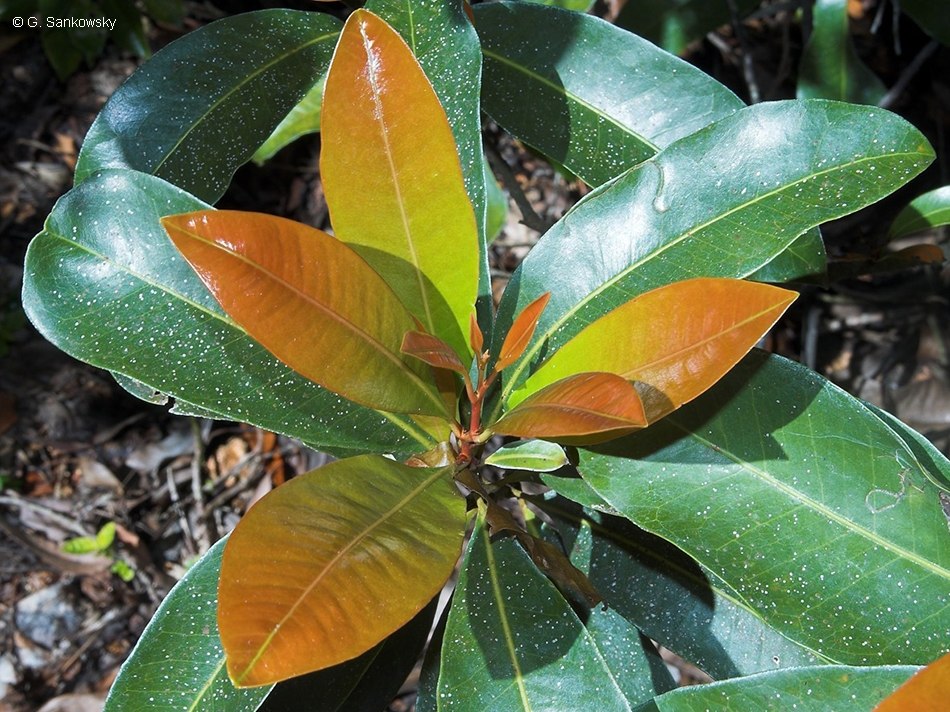 Noah’s Oak (Buckinghamia ferruginiflora) © G Sankowsky
#ForestFlora – Noah’s Oak (Buckinghamia ferruginiflora) is a striking native rainforest tree that is endemic to north-east Queensland. Despite its name, it isn’t a true oak at all, but a member of the Proteaceae family – an ancient plant lineage with deep Gondwanan roots that also includes banksias, grevilleas and silky oaks.
Noah’s Oak grows naturally in tropical lowland and upland rainforests of the Wet Tropics, with records showing its distribution from the Daintree region south to around Ingham. It is typically found on well-drained soils, often derived from granite or metamorphic rock, where it forms part of the rainforest canopy or sub-canopy. Mature trees can reach 30 metres or more, contributing to the layered structure that makes these forests so rich and complex.
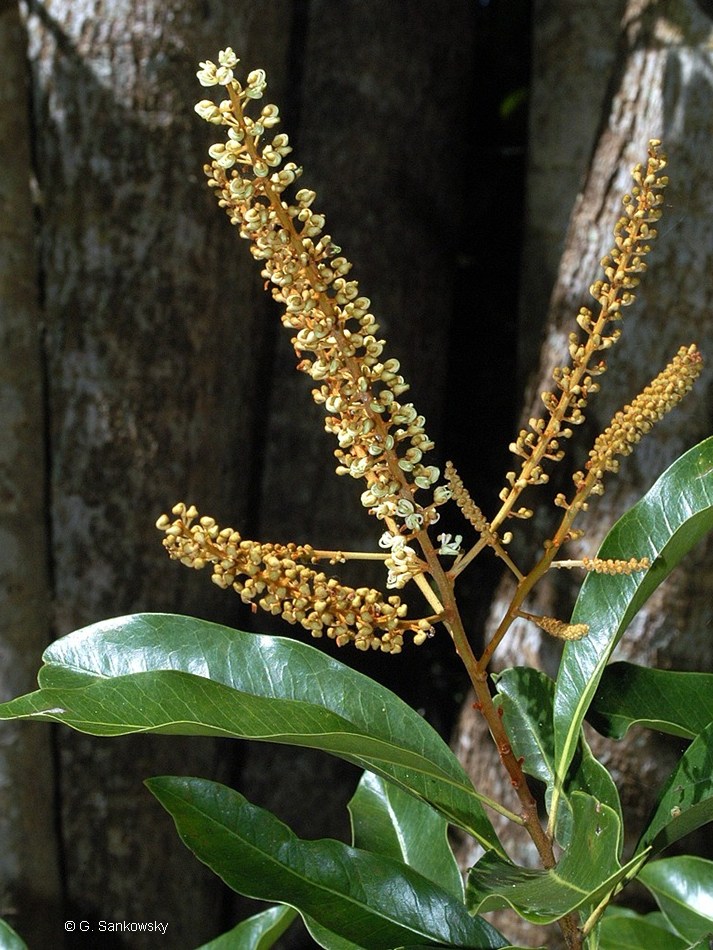
One of the most distinctive features of Noah’s Oak is its flowering display. The tree produces upright spikes of small flowers that are coloured a rusty red to brownish tone, which is reflected in its species name ferruginiflora, meaning “rust-coloured flowers”. These flower spikes are rich in nectar and are known to attract insects and birds, helping support pollinators within the rainforest ecosystem. Flowering generally occurs seasonally, adding subtle but important pulses of food to the forest.
The leaves of Noah’s Oak are tough, leathery and glossy, an adaptation that helps reduce water loss and withstand the humid, competitive rainforest environment. Like many members of the Proteaceae family, the species is adapted to nutrient-poor soils. Research into Proteaceae suggests they have specialised root systems that allow them to access phosphorus and other nutrients that are otherwise difficult to obtain, giving them an advantage in ancient, weathered landscapes like those of north Queensland.
Ecologically, Noah’s Oak plays a quiet but important role. As a long-lived canopy tree, it contributes to habitat structure, offering shelter and foraging opportunities for birds, insects and other rainforest species. Its flowers support pollinators, while its presence helps stabilise soils and maintain the microclimate of the forest floor below. Trees like Noah’s Oak are part of the slow, steady processes that keep rainforest ecosystems functioning over long timescales.
From a scientific perspective, Noah’s Oak is also valuable. Because it belongs to an ancient plant family with links to southern hemisphere forests, it helps researchers better understand rainforest evolution, plant adaptation, and the historical connections between Australia and other Gondwanan landmasses. Queensland Herbarium records and university research have made it an important reference species for studying rainforest composition in the Wet Tropics.
At present, Buckinghamia ferruginiflora is not listed as threatened under the Queensland Nature Conservation Act, but it is classed as vulnerable. Its naturally restricted distribution means it depends on the ongoing protection and careful management of rainforest habitat. Long-term protection and restoration of rainforest areas helps ensure species like Noah’s Oak can continue to grow, flower and support the web of life around them.
Fun Facts
- Noah’s Oak is endemic to Queensland, meaning it occurs nowhere else in the world.
- Although called an “oak”, it is more closely related to banksias and grevilleas than to true oaks.
- The Proteaceae family is considered evolutionarily ancient, with fossil records dating back tens of millions of years.
- The genus Buckinghamia was named in honour of William Buckingham, an early contributor to botanical work in Australia.
- Studying trees like Noah’s Oak helps scientists understand how rainforest plants survive in nutrient-poor tropical soils.
References
- Queensland Government Department of Environment and Science – Buckinghamia ferruginiflora species profile
- Queensland Herbarium, Regional Ecosystems and Flora Records
- Australian Tropical Herbarium, Wet Tropics Flora Database
- James Cook University research on Proteaceae and Wet Tropics rainforest ecology
- Atlas of Living Australia – Buckinghamia ferruginiflora
- Images courtesy of G Sankowsky / LucidCentral
Want more good Rainforest news in your life?
Subscribe to our eNews | Follow us on Instagram | Like us on Facebook | Subscribe to our YouTube channel
Help Protect Rainforests Forever
Donate to Protect Rainforests Forever | Become a Rainforest Guardian | Partnership Options