A Casque of Thousands
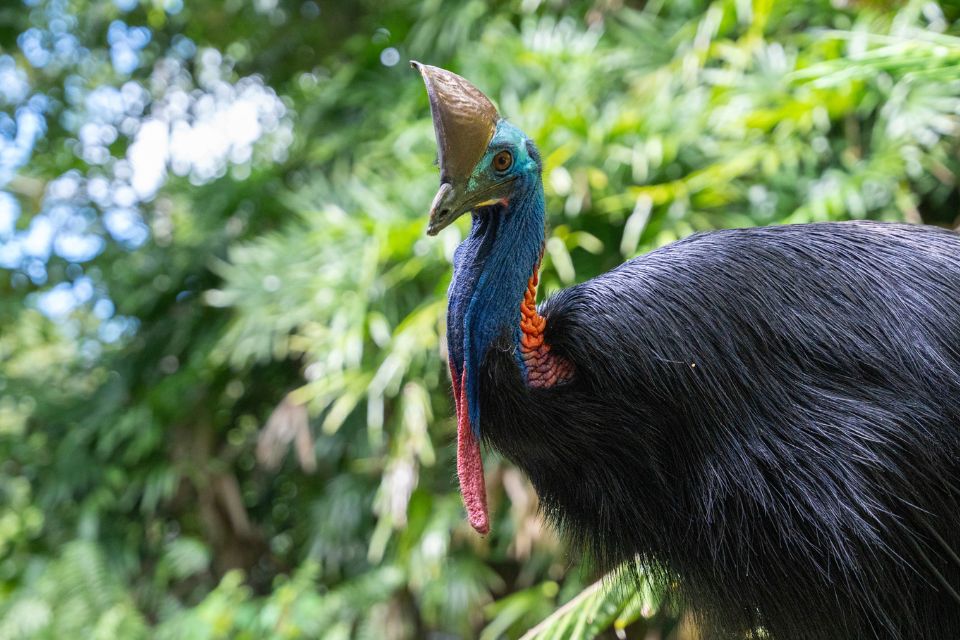
Photographer: Martin Stringer
A recent study examined the internal anatomy of a cassowary casque in an attempt to better understand its evolution and ecological function.The Southern Cassowary (Casuarius casuarius) is one of Australia’s most distinctive birds yet surprisingly, there is still much to learn about this majestic creature. This is of particular concern given the important role that cassowaries play in maintaining tropical rainforest diversity and structure.
Some of the many things we don’t know about cassowaries are: how they communicate with each other, how they move within the landscape, what their mating rituals are, and details of their dietary habits.
Cassowary casques
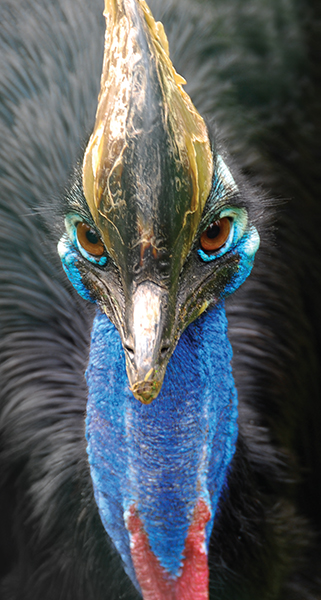
Photographer: Paul Ijsendoorn
Cassowaries are one of only a handful of animals to have a casque, the ‘helmet-like’ structure that sits atop their heads. Made of keratin, the key structural material found in hair and nails, it is a defining feature of the species. However, despite its prominence, we don’t really know why these helmet-like structures exist.
The cassowary has its casque because it functions as a …. |
Likelihood |
Reasons |
| Resonance box used in low-frequency communication | Most likely | See discussion in the text |
| Sexual display | Plausible, but more research needed | Unconfirmed indications that casque height differs between males and females. |
| Weapon used during combat with other cassowaries | Extremely unlikely |
The casque is too light and fragile. No observational data to support this theory. Ratites (large, flightless birds of Gondwanan origin, many now extinct) usually fight by kicking. |
|
Tool for moving foliage on the rainforest floor
|
Unlikely |
Only one published observation of this behaviour Unfavourable position and structural form of the casque |
| A tool to knock hanging branches to dislodge fruit | Unlikely |
Lack of observational data The casque is too light and fragile Unfavourable position and structural form of the casque |
| Head protection when moving through the forest | Unlikely |
Lack of observational data The casque is not robust enough |
Table 1: Discussion on casque function based on the anatomical description by Dr Naish’s team
Reproduced with permission from the Wet Tropics Management Authority
Want more good Rainforest news in your life?
Subscribe to our eNews | Follow us on Instagram | Like us on Facebook | Subscribe to our YouTube channel
Help Protect Rainforests Forever
Donate to Protect Rainforests Forever | Become a Rainforest Guardian for as little as $2 a month | Partnership Options