When Red Tape Slows Nature’s Recovery
The Daintree Oxbow restoration is emerging as one of the most important ecological opportunities in Far North Queensland — and also one of the most complex. As this Yahoo News article explores, efforts to restore degraded floodplain land near the Daintree River have been slowed by outdated planning rules that no longer reflect the realities on the ground.
Written by Michael Dahlstrom, Environment Editor at Yahoo News Australia, the piece examines how Rainforest Rescue’s plans to remove invasive weeds and re-establish native rainforest have run into regulatory barriers originally designed to protect a now-declining agricultural industry. At stake is not just a single property, but a rare wetland system with deep connections to the Daintree River, its mangroves, and the Great Barrier Reef beyond.
What follows is the original article as published by Yahoo News, shared here to help illuminate the broader context surrounding restoration, land use change, and the urgent need for planning frameworks that support nature-positive outcomes.
Council rule halts landowner’s incredible act on ‘rare’ Aussie land
A 2018 rule is preventing the restoration of property that’s riddled with weeds.
Michael Dahlstrom, Environment Editor
Thu 13 November 2025 at 5:00 am AEDT
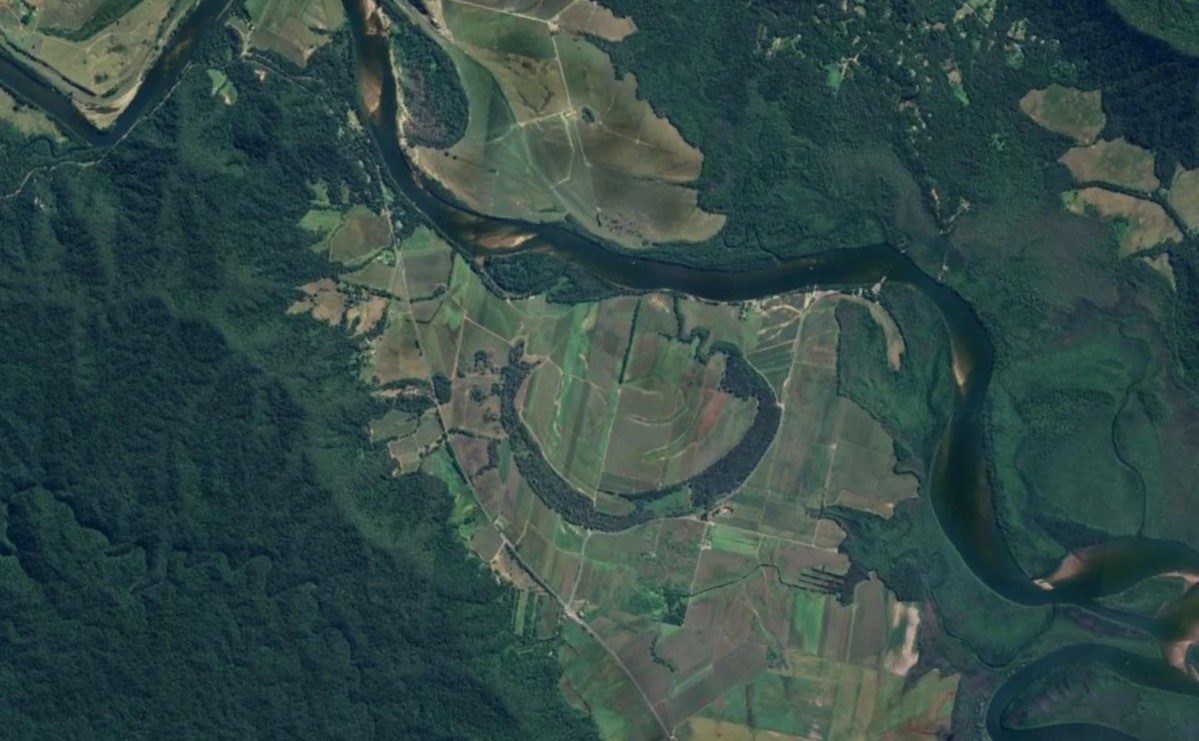
An aerial view showing the oxbow on the Lower Daintree River.
Rainforest Rescue would like to restore the wetland and rainforest around this oxbow on the Lower Daintree.
Source: Google Earth
A landowner’s efforts to plant trees around a floodplain have been halted after the local council said they’d require a permit. At the centre of the problem are two patches of farmland behind a tree-lined “oxbow” off Queensland’s Daintree River.
This meandering bend in the landscape resembles a smile in satellite images and once harboured a thriving wetland. Today, it is cut off from the river by floodgates, and its biodiversity has degraded.
Due to its waterfront location, properties on this section of Cape Tribulation Road regularly flood, and some have remained uncultivated for at least 15 years. So non-profit Rainforest Rescue drew up plans to remove the weeds and restore the lush ecosystem that once stood there.
“It was all Guinea grass, some remnant sugar cane, opportunistic trees cropping up through natural regeneration, and an old house full of asbestos,” its CEO Branden Barber told Yahoo News.
Why can’t trees be planted?
Slowing Rainforest Rescue’s progress is a 2018 council rule designed to stop farmland from being turned into permanent plantations. Its narrow wording has delayed plans to create a native forest without applying for a time-consuming permit.
“When the Shire rewrote the planning scheme to protect the sugar cane industry, there was a sugar mill, there was a sugar industry,” Barber said.
“But that context has changed, and it hasn’t happened overnight, it’s been changing for years.”
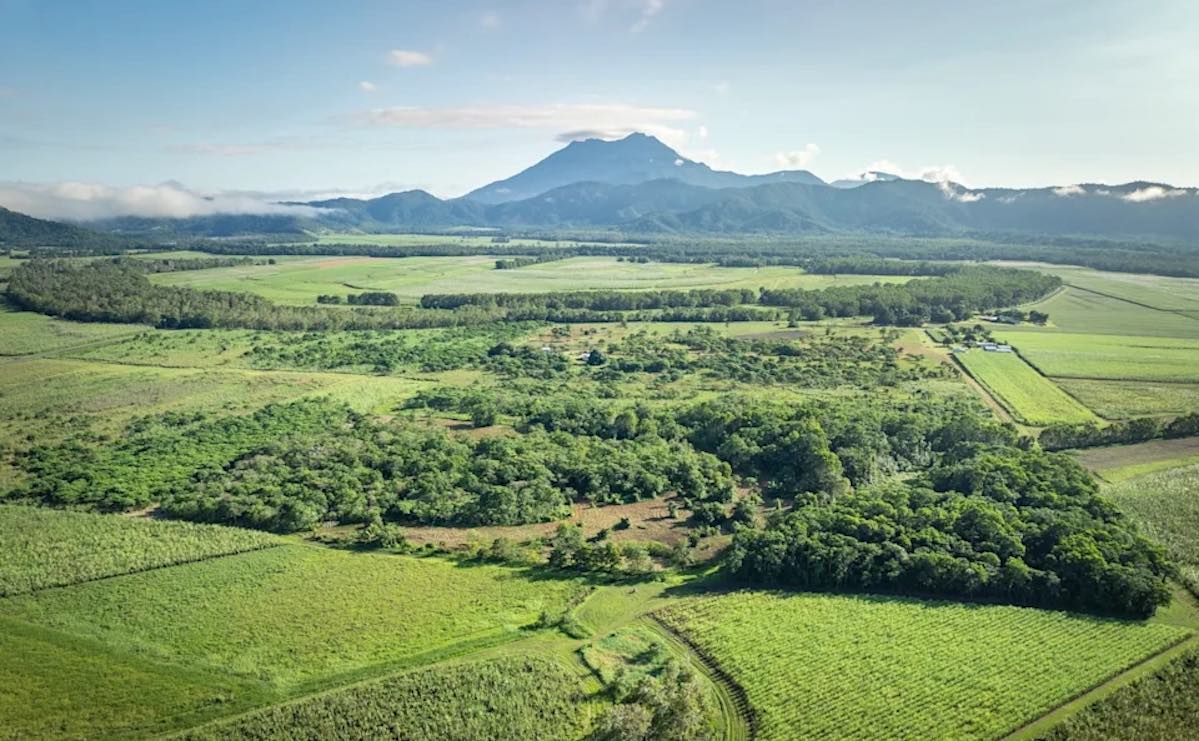
110 Cape Tribulation Road with the Oxbow, River and Thornton Peak in the background. Source: Martin Stringer
Why is restoring the property so important?
While the “oxbow” is no longer a thriving wetland, it is home to the three-hectare McDowell Swamp, and is still considered to be a “rare” and “valuable ecosystem” by the state government.
The water from this area flows into the Daintree River, then into one of the world’s most biodiverse mangrove systems, which purifies water before it enters the Coral Sea and the Great Barrier Reef.
“It used to be an incredible wetland, because it was literally like an organ just pumping benefits into the Daintree River and into the mangrove. It was a fish nursery for barramundi, there were sawfish and dugong came through there. You don’t see them anymore,” Barber said.
“Half was cleared in the 1950s, then the rest in the 1970s and 1980s, and it just became a swamp. There are only three or four species of plant that you see in that smile of trees, but there used to be a myriad.”
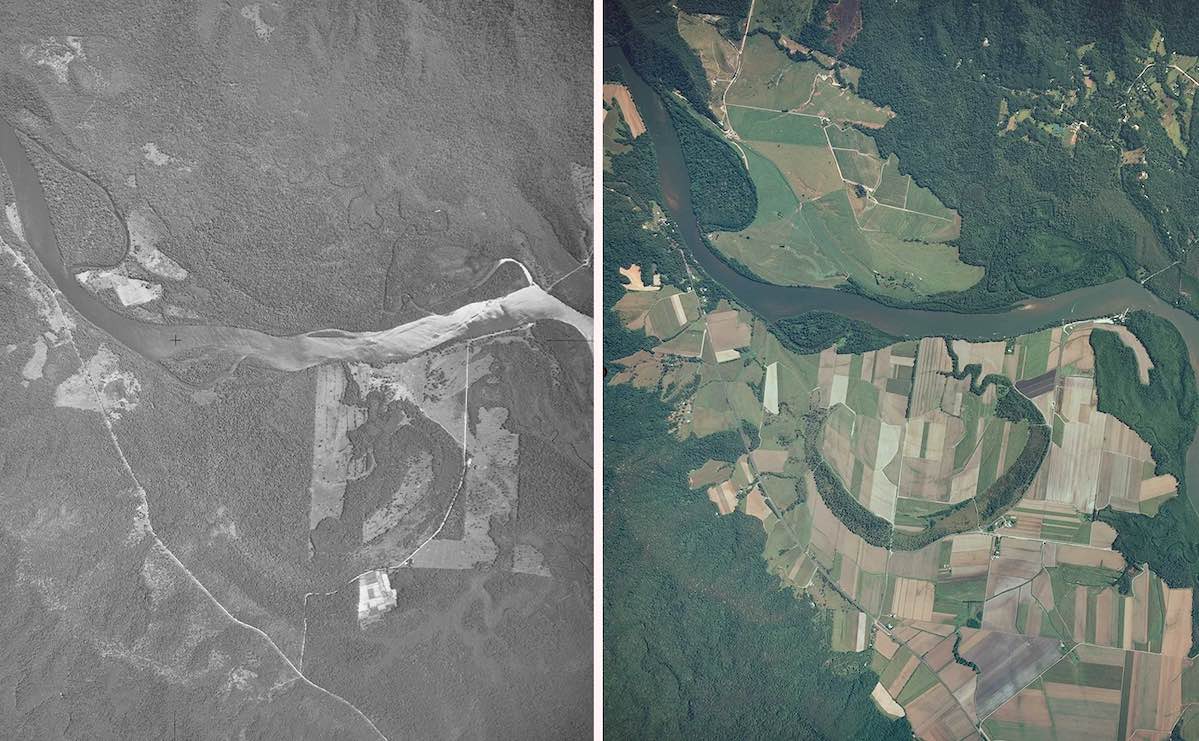
Two aerial shots of the Oxbow from 1955 and 2000. Source: QImagery
Charity could plant 150,000 trees a year
Rainforest Rescue has the capacity to grow 150,000 trees a year and attract a workforce ready to put them in the ground. Including the land behind the oxbow, there are 17 properties that Rainforest Rescue wants to restore.
But what makes the oxbow site important to the community is that it’s next to the Daintree River’s ferry landing, meaning the degraded paddocks are seen by tourists from around the world when they visit Australia.
“Tourism is the lifeblood of this region,” Barber said, adding that in 2025 it’s many more times important to the local economy than sugar cane.
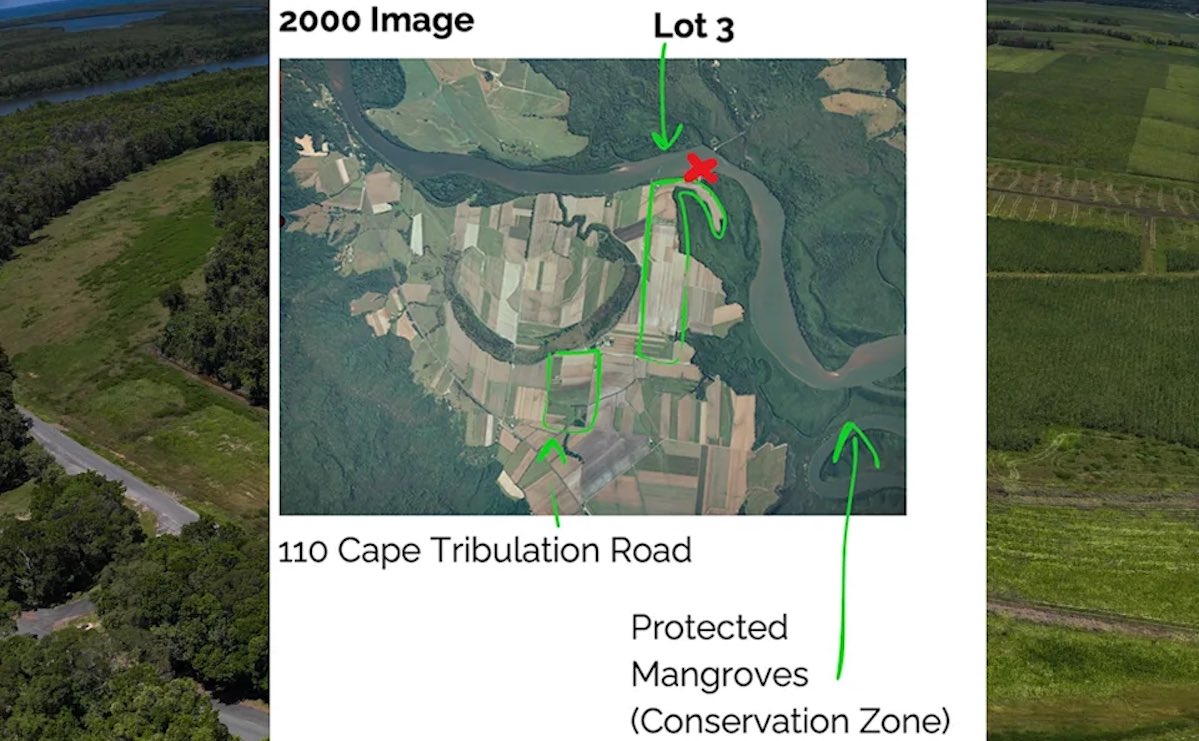
There are two properties close to the oxbow that Rainforest Rescue wants to restore. Source: Rainforest Rescue
Council set to review contentious planning law
When Yahoo News reached out to the local council about whether it supported restoring land, Mayor Lisa Scomazzon said it does not maintain a position on ‘regeneration’.
She confirmed the permit system will be reviewed next financial year. “All submissions on amendments will be considered,” she said in an email.
In 2024, the Mossman Sugar Mill, which processed much of the region’s sugar cane, closed after 127 years in operation, entering voluntary administration. As farming along the river has become less profitable, Rainforest Rescue is hoping more landholders will see the benefit in restoring natural vegetation.
Once underproductive or marginal land is repaired, it can be profitable in the growing industries of carbon and biodiversity markets — financial trading schemes that incentivise environmental protection.
“Companies are trying to offset their carbon, and this region is in a privileged position. There’s no place on Earth like the Daintree,” Barber said.

.
The story of the Daintree Oxbow restoration is about more than one parcel of land. It reflects a wider transition now unfolding across the region — from marginal farmland toward restoration, resilience, and long-term ecological repair.
With the closure of the Mossman Sugar Mill and increasing flood impacts on low-lying land, opportunities are opening for landholders, communities, and conservation organisations to rethink how these landscapes are used. Restoration not only supports biodiversity and water quality, but also creates local jobs, strengthens tourism, and positions the region for emerging carbon and biodiversity markets.
Rainforest Rescue continues to work collaboratively with landholders, Traditional Owners, scientists, and government to ensure that restoration efforts are guided by ecological integrity and community benefit, even when the path forward involves navigating complex planning systems.
We’re grateful to Yahoo News for helping bring national attention to this issue, and for shining a light on why restoring places like the Daintree Oxbow is essential for the health of rainforest, reef, and future generations.
This article was originally published by Yahoo News Australia and written by Michael Dahlstrom, Environment Editor. It is reproduced here for educational and contextual purposes, with full credit to the original publisher.
Want more good Rainforest news in your life?
Subscribe to our eNews | Follow us on Instagram | Like us on Facebook | Subscribe to our YouTube channel
Help Protect Rainforests Forever
Donate to Protect Rainforests Forever | Become a Rainforest Guardian | Partnership Options